Category: News

ReadEPC™ System


ReadEPC™: Why RFID Verification Matters & How It Protects Your Supply Chain

In today’s fast-moving retail and logistics environment, accurate product identification isn’t just a nice-to-have — it’s a compliance requirement and operational necessity. With mandates like Walmart’s RFID requirement for EPC tags, manufacturers and suppliers must ensure every Radio-Frequency Identification (RFID) tag they ship is properly encoded and verified. That’s where ReadEPC™ comes in — providing reliable, GS1-compliant RFID tag verification that protects inventory accuracy, reduces errors, and safeguards your supply chain.


What Is RFID Verification?

At its core, RFID verification is the process of reading and confirming that an RFID tag’s encoded information is correct, valid, and usable for downstream systems. Unlike simple barcode scanning, RFID works by wirelessly communicating with a tiny chip embedded in a product label. That chip carries an Electronic Product Code (EPC) — a globally unique identifier that links the physical item to your digital system.

Verification confirms that:

  • The tag contains the correct EPC value

  • It was properly encoded according to standards (e.g., SGTIN-96)

  • The encoding matches your UPC/barcode or internal product record

Without this step, bad tags — duplicates, miswrites, or unreadable units — can propagate downstream, causing inventory mismatches, chargebacks, and compliance violations.


Why Verification Is Essential

Companies adopt RFID for accuracy, speed, and automation — but those benefits only materialize when the tags themselves are trustworthy.

Key benefits of RFID verification include:

  • Error Reduction & Compliance: Automates validation of tag data, avoiding mis-encodings and supporting mandates like Walmart’s EPC requirement

  • Inventory Confidence: Verified EPC data ensures every scan reflects the correct product

  • Supply Chain Transparency: Reliable encoding enables seamless traceability from manufacturing through distribution

  • Operational Efficiency: Automated verification reduces manual audits and costly mis-shipments

These advantages are central to modern item verification systems that integrate RFID data with ERP and WMS platforms, ensuring products are not only tracked — but verifiably tracked throughout their lifecycle.


Introducing ReadEPC™

Microcom’s ReadEPC™ system is designed specifically for practical, real-world RFID verification:

How It Works

Read RFID Tags Wirelessly
Connect a desktop UHF RFID reader to your PC.

Verify Tag Data in Real Time
The ReadEPC™ application reads the tag’s EPC and cross-references it with expected encoding, displaying results instantly — including product details and a visual preview.

Match to UPC Barcode
ReadEPC™ ties RFID data back to your product UPC, allowing immediate confirmation that encoded data matches the physical item.

This built-in verification is especially valuable for businesses preparing products for retail distribution, where every tag must be not only encoded, but proven valid.


Real-World Value in Your Workflow

Imagine packing thousands of units for shipment, each requiring an RFID tag that:

  • Matches internal SKU data

  • Is encoded to GS1 standards

  • Will be recognized by compliant retail and warehouse systems

Without verification, even a small percentage of bad tags can lead to:

  • Inventory discrepancies

  • Delayed shipments

  • Costly recall cycles

  • Operational bottlenecks

ReadEPC™ ensures that nothing leaves your facility without being verified first. It acts as the safeguard between RFID encoding and real-world performance.


Verification vs. Simple Tag Reads

It’s important to distinguish two RFID actions:

Function What It Does
Tag Read Detects and retrieves a tag’s EPC wirelessly
Tag Verification Confirms the EPC matches intended encoding and product data

ReadEPC™ combines both — meaning it does more than simply detect a tag; it validates accuracy and conformance.


Why This Matters for Retail Mandates

Mandates like Walmart’s require more than just applying RFID tags — they demand properly encoded EPC data that meets GS1 standards.

Without verification:

  • Duplicate or mis-encoded tags may go unnoticed

  • Poor quality tags can slip through

  • Downstream systems may reject inventory

ReadEPC™ provides confidence and proof that labels meet requirements before products ever leave your doors.


Final Thoughts

In today’s competitive supply chain landscape, RFID isn’t just about having tags — it’s about trusting the data those tags contain. With ReadEPC™, you gain an easy-to-deploy RFID verification system that:

  • Ensures compliance

  • Protects product data

  • Improves operational accuracy

  • Enhances supply chain visibility

If you’re serious about RFID compliance and want verification that integrates seamlessly with your print and encode processes, ReadEPC™ bridges the gap between RFID deployment and verified performance.

Read More

2026 Printing & RFID Technology Trends: What Enterprises Should Expect This Year

As enterprises enter 2026, printing and RFID technologies continue to play a critical—yet evolving—role in operational efficiency, compliance, and customer experience. What was once considered “back-office infrastructure” is now tightly integrated into automation strategies, data intelligence, and self-service environments.

From the acceleration of RFID adoption across retail and logistics to the growing demand for rugged, reliable thermal printers in kiosks and industrial workflows, the year ahead presents both opportunities and challenges. Here’s what organizations should be watching—and planning for—in 2026.

  1. Smarter Thermal Printing at Scale

Thermal printing remains the backbone of labeling, ticketing, and transaction-based environments, but expectations have shifted. In 2026, enterprises are prioritizing:

  • On-demand, high-volume performance without sacrificing print quality or uptime
  • Flexible media handling, including roll-fed and cut-sheet applications
  • Deeper system integration, allowing printers to function as intelligent endpoints within larger workflows

Printers are no longer standalone devices. They are expected to communicate seamlessly with software platforms, scanners, kiosks, and RFID systems—often in unattended or high-traffic environments where reliability is non-negotiable.

  1. RFID Moves Beyond Compliance

While mandates such as retailer RFID requirements have driven adoption in recent years, 2026 marks a shift from compliance-driven to value-driven RFID implementations.

Organizations are expanding RFID use cases to include:

  • Real-time inventory visibility
  • Asset and equipment tracking
  • Improved accuracy in fulfillment and logistics
  • Enhanced customer engagement through data-enabled labeling

The most successful deployments pair RFID-ready printing hardware with flexible encoding and data solutions—ensuring EPC labels are accurate, readable, and scalable as needs grow.

  1. Sustainability and Material Efficiency Gain Momentum

Sustainability continues to influence purchasing decisions across industries. In 2026, enterprises are evaluating printing solutions not only on performance, but also on:

  • Media efficiency and waste reduction
  • Longer device lifecycles in industrial environments
  • Smarter label design that balances compliance, branding, and material use

Thermal printing—when paired with the right hardware and consumables—remains a strong option for organizations seeking durability without unnecessary environmental impact.

  1. Kiosks and Self-Service Demand Industrial Reliability

Self-service technology is expanding rapidly across retail, entertainment, logistics, healthcare, and government settings. In these environments, the printer is often the final touchpoint of the customer experience—producing tickets, receipts, credentials, or keepsakes.

In 2026, kiosk deployments are prioritizing printers that offer:

  • Consistent performance in unattended environments
  • Compact form factors with industrial-grade components
  • Fast, quiet output that enhances—not disrupts—the user experience

Reliability matters more than ever when a printer is embedded inside a kiosk or photobooth and expected to perform thousands of cycles without intervention.

  1. What This Means for Your 2026 Technology Strategy

As you plan for the year ahead, consider the following questions:

  • Are your current printing solutions scalable for increased volume or new applications?
  • Is your infrastructure RFID-ready—not just for today’s requirements, but future expansion?
  • Can your printers integrate easily with your existing software, kiosks, or automation platforms?

Choosing the right printing and RFID solutions in 2026 isn’t just about hardware—it’s about aligning technology with long-term operational goals.

Looking Ahead

At Microcom Corporation, we continue to engineer printing and RFID solutions designed for real-world enterprise environments—where performance, reliability, and flexibility matter most. As industries evolve, so do the demands placed on the technology behind them.

If you’re planning upgrades or new deployments in 2026, now is the time to evaluate how your printing infrastructure supports the bigger picture.


#RFID #ThermalPrinting #EnterpriseTechnology #Automation #SupplyChainTechnology #IndustrialPrinting #SelfServiceTechnology #DigitalTransformation #OperationalEfficiency
#TechnologyTrends #EnterpriseSolutions #SmartManufacturing #Innovation #KioskTechnology
#CustomerExperience #SelfService #EmbeddedSystems #IndustrialDesign #MicrocomCorporation
#PrintSolutions

Read More

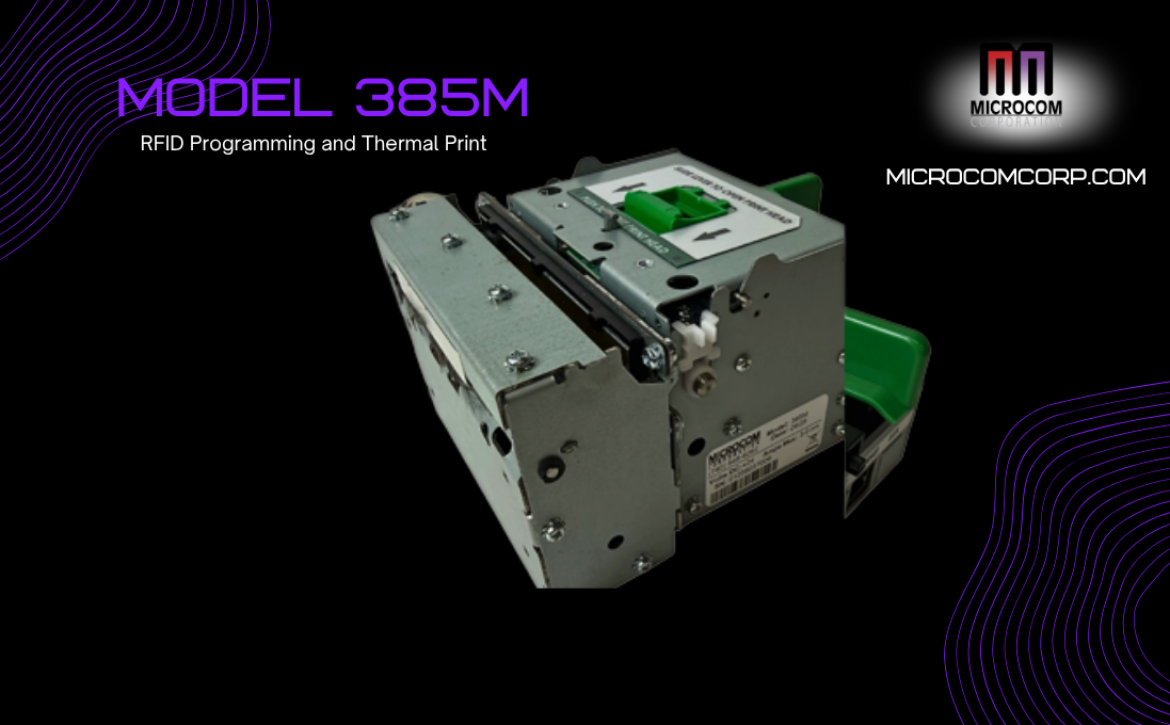
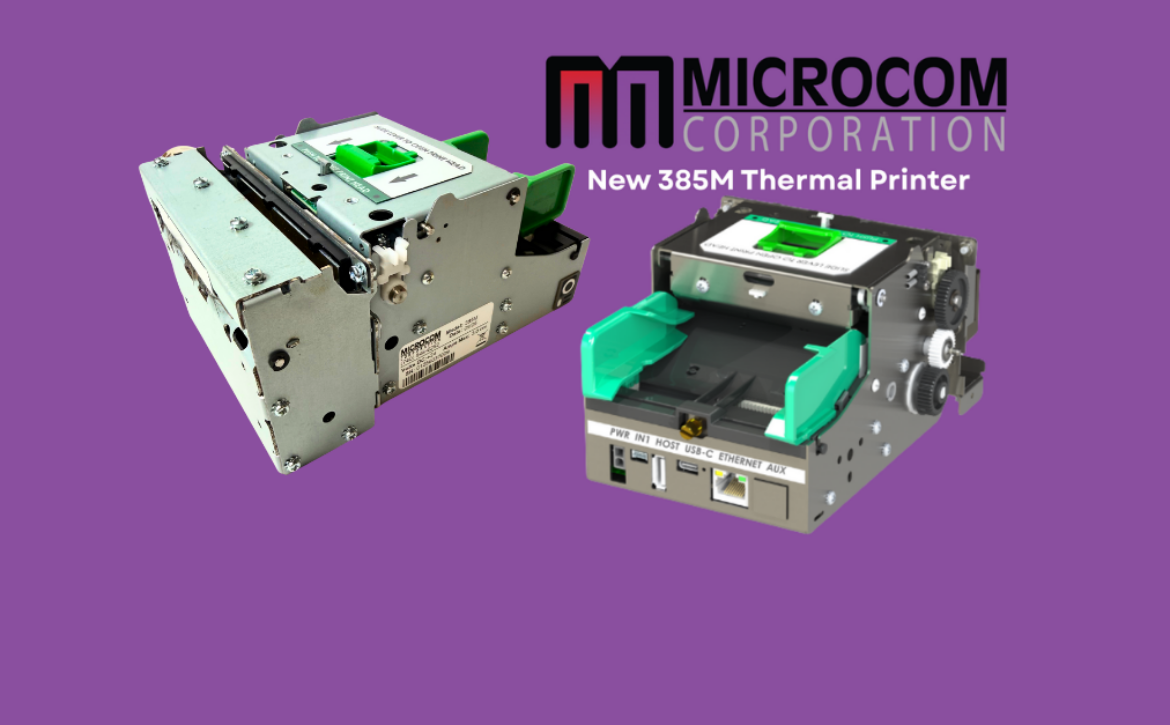
Closing Out the Year With Innovation: Introducing Microcom Corporation’s New 385M Thermal Printer

As 2025 comes to a close, organizations across the kiosk, self-service, ticketing, and amusement markets are evaluating the technologies that shaped the year—and the tools that will carry them into the next. For Microcom Corporation, December marks both reflection and forward momentum. We are excited to share an early look at our newest innovation in thermal printing: the Microcom 385M.

Engineered for high-duty, space-constrained applications, the 385M is designed for kiosk manufacturers, system integrators, and solution providers who require exceptional reliability and long-life performance. After its initial debut at IAAPA 2025, the 385M is slated for full production in February, and early interest underscores the demand for robust printing solutions that reduce downtime and simplify field service.

The 385M builds on Microcom’s legacy of engineering-focused design. It features a compact footprint, faster performance, and a redesigned cutter optimized for heavy-use environments. Its modular architecture supports flexible integration into kiosks, ticketing terminals, and amusement systems, while its durable components deliver the high Mean Time Between Failure (MTBF) rates our customers depend on. For operations that cannot afford printing interruptions, the 385M provides consistent output across variable media types and demanding duty cycles.

Microcom’s approach to product development prioritizes practical, real-world challenges: inconsistent maintenance schedules, high-volume operation, environmental variability, and the need for field-serviceable hardware. Every enhancement in the 385M reflects direct feedback from our partners and customers, ensuring the printer performs reliably in environments where uptime is mission-critical.

As we conclude the year, Microcom remains committed to supporting the organizations building the next generation of self-service experiences. Our team will continue advancing our thermal printing solutions, expanding support resources, and working closely with integrators to optimize system performance and operational efficiency.

Thank you to our customers and industry partners for your collaboration throughout 2025. We look forward to bringing the 385M to market in early 2026—and to another year of powering dependable, high-performance kiosk and self-service systems.

#MicrocomCorporation #ThermalPrinting #KioskTechnology #SelfServiceSolutions #TicketingTechnology #AmusementIndustry #OEMIntegration #EngineeringInnovation #AutomationTechnology #385M

Read More

Holiday Rush Ready: How Thermal Printing Keeps Logistics and Retail Flowing Smoothly

As the holidays approach, the pressure is on for logistics companies, retailers, and food service providers to keep products moving, shelves stocked, and customers happy. Behind the scenes of this seasonal surge is one critical piece of technology that keeps everything running efficiently — thermal printing.

Read More

Ensuring Election Readiness with Secure Ballot Printing Solutions

With President Trump’s recent executive order emphasizing the shift toward paper ballots, election officials and system integrators, including those using the (VVSG) version 2.0, are preparing for one of the most significant transitions in modern election history. The move underscores a fundamental truth: voter confidence begins with the integrity of the ballot itself.

Read More

The Unsung Hero Inside the Kiosk: Why Microcom Printers Are the Smart Choice

Whether you’re scanning tickets, shipping parcels, or weighing grain at a scale kiosk, the printer is the final touchpoint—and it needs to work—every time. At Microcom Corporation, we specialize in kiosk printer solutions engineered for reliability, speed, and integration into demanding environments.

Read More

Powering Cannabis Compliance: RFID-Enabled Label Printing with Microcom’s 360c and 485T Series

In the evolving world of cannabis cultivation and distribution, one thing is constant: compliance is king. From state-mandated seed-to-sale tracking to packaging regulations and inventory audits, cannabis operators must stay ahead of complex, ever-changing requirements. That’s where Microcom’s RFID-enabled label printers come in.

Whether you’re printing vibrant, retail-ready product labels or durable transport and inventory tags, Microcom’s 360c Color Printer and 485T Series Thermal Printers offer smart, scalable solutions—fully capable of printing and encoding RFID labels that integrate with platforms like Metrc, Canix, and StashStock.

Read More

Rising Above Tarriffs: Delivering Quality, Sustainability & Service Without Compromise

Navigating Tariffs with Confidence

Rising costs and uncertain policies don’t have to mean compromised quality or slower growth. With Microcom’s high-performance printers, RFID expertise, and USA-based customization, you’re equipped to move forward with clarity and control.

Let’s overcome today’s challenges—and build something smarter—together.

Read More

𝐒𝐞𝐫𝐯𝐢𝐜𝐞 𝐓𝐡𝐚𝐭 𝐒𝐭𝐢𝐜𝐤𝐬: 𝐓𝐡𝐞 𝐌𝐢𝐜𝐫𝐨𝐜𝐨𝐦 𝐃𝐢𝐟𝐟𝐞𝐫𝐞𝐧𝐜𝐞 𝐑𝐞𝐚𝐥 𝐒𝐮𝐩𝐩𝐨𝐫𝐭 𝐟𝐫𝐨𝐦 𝐑𝐞𝐚𝐥 𝐏𝐞𝐨𝐩𝐥𝐞—𝐑𝐢𝐠𝐡𝐭 𝐇𝐞𝐫𝐞 𝐢𝐧 𝐭𝐡𝐞 𝐔𝐒𝐀

What truly sets us apart? Our in-house USA-based support team, made up of seasoned engineers and technical specialists, is available five days a week to help you get the most out of your investment. Whether you purchased directly from us or through one of our valued partners, you’re never more than a phone call or email away from real help—no overseas call centers, no runaround, no guessing games.

Read More

Revolutionizing Patient Safety with Printers Producing Full-Color, On-Demand Risk Notification Wristbands

In today’s fast-paced healthcare environment, patient safety and efficiency are more critical than ever. Hospitals and medical facilities are constantly looking for ways to streamline processes, reduce errors, and improve care. One often overlooked area where technology can make a significant impact is in patient wristband identification. That’s where Microcom Corporation’s latest innovation comes in—our full-color, on-demand wristband printing technology is set to change the way healthcare providers manage patient risk identification.

The Problem: Multiple Wristbands, Increased Confusion

Many hospitals follow standardized color-coded wristband systems to indicate patient risks—red for allergies, yellow for fall risk, and purple for do-not-resuscitate (DNR) status, among others. While this system improves communication among medical staff, the traditional method of using separate wristbands for each risk factor can lead to clutter, discomfort, and even confusion in high-pressure situations.

The Solution: One Wristband, All the Information

Microcom’s full-color, on-demand wristband printer eliminates the need for multiple wristbands by integrating all patient risk indicators onto a single, easy-to-read band. With our technology, hospitals can seamlessly comply with standardized wristband colors while reducing the risk of misidentification. Instead of juggling multiple wristbands, healthcare providers can now rely on a single durable, high-quality wristband that clearly displays all necessary patient risk information.

Why This Matters

Hospitals and healthcare facilities are under increasing pressure to enhance patient safety and efficiency. Our innovative wristband printing solution addresses these challenges with key benefits:

  • Compliance with Standardized Colors – Ensures consistency across healthcare settings.
  • On-Demand Printing – Reduces waste, eliminates pre-printed stock, and streamlines hospital workflows.
  • Clarity and Efficiency – One band with all critical information improves visibility and reduces errors.
  • Durable and Comfortable – Designed for long-lasting wear without compromising patient comfort.
  • Seamless Integration – Easily connects with electronic health record (EHR) systems for real-time, automated printing.

A Game-Changer for Healthcare Supply Buyers

As healthcare supply buyers look for solutions that improve hospital efficiency while maintaining compliance with industry standards, our full-color wristband printer stands out as a cutting-edge innovation. This technology is not just about printing—it’s about improving patient care, enhancing communication, and reducing errors in a field where every second counts.

Are you ready to upgrade your hospital’s wristband system? Contact us today to learn more about our full-color, on-demand wristband printing solutions.

For more details, visit www.microcomcorp.com or reach out to us at marketing@microcomcorp.com or 740-548-6262.

Read More